CRO Basics
Exit Intent Popups That Convert
Dec 30, 2025

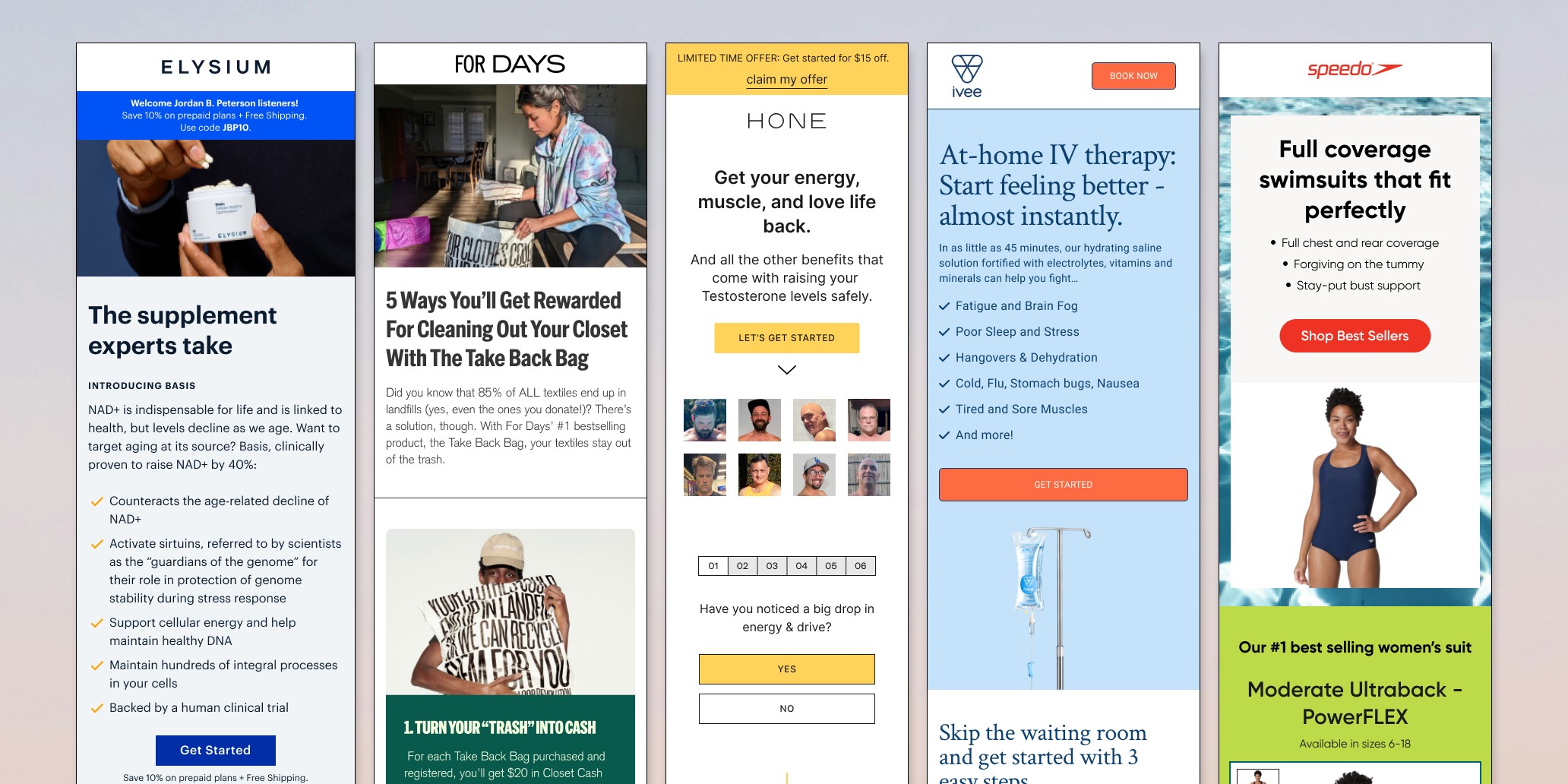
Exit intent pop-ups appear when visitors show behavioral signals associated with leaving your website. They detect abandonment behavior and deliver a targeted message at the moment someone is likely to exit or disengage.
When implemented carefully, exit intent popups allow one final, targeted opportunity to convert visitors who would otherwise leave without taking action.
What Are Exit Intent Pop-ups
Exit intent pop-ups use behavioral tracking to identify when visitors are likely to leave a website.
On a desktop, this typically includes mouse movement toward the browser close button, address bar, or back navigation. On mobile, true exit intent cannot be detected directly. Mobile implementations instead infer abandonment using signals such as rapid scrolling, inactivity, tap behavior, or navigation patterns associated with exit.
When these signals appear, a targeted message is displayed. This message may offer a discount, capture an email address, recommend related content, or address a common objection.
The goal is straightforward. Convert visitors who would otherwise leave without taking action.
Do Exit Intent Pop-ups Actually Work
Exit intent pop-ups can be effective when executed correctly.
CRO case studies and vendor benchmarks frequently report incremental conversion lifts in the 2 to 4% range from exit intent popups. While modest on the surface, these gains represent recovered conversions from visitors who would otherwise be lost.
Cart abandonment popups consistently perform best. High-performing campaigns in this category often achieve double-digit conversion rates because they target visitors who have already demonstrated strong purchase intent but encountered friction during checkout.
Vendor-reported benchmarks also show wide performance variance. Average pop-up conversion rates tend to fall in the mid single digits, while top-performing campaigns significantly outperform those baselines. This reinforces a core CRO principle. Execution matters more than the tactic itself.
Exit intent pop-ups work best when they solve a real problem or remove a specific barrier. Generic pop-ups that ask for an email address without a clear value exchange consistently underperform.
Why Exit Intent Pop-ups Convert Visitors
Exit intent pop-ups convert primarily because of timing.
They appear after a visitor has engaged but before the exit is complete. At this point, the visitor understands the offer, has evaluated relevance, and demonstrated some level of intent.
Exit intent also avoids interrupting engaged users. Only visitors showing abandonment signals see the pop-up, which preserves the experience for visitors who are still progressing through the page.
From a behavioral standpoint, exit intent leverages loss aversion. People are more motivated to avoid losing value than to pursue something new. A well-structured pop-up reframes leaving as a missed opportunity rather than a neutral decision.
Five Exit Intent Popup Strategies That Increase Conversions
1. Offer Discount Codes for Cart Abandoners
Cart abandonment reflects high intent behavior. Visitors added products to their cart but encountered friction such as pricing concerns, shipping costs, or uncertainty.
Offering a discount or incentive at this moment can recover otherwise lost revenue and capture email addresses for follow-up. Effective discount pop-ups clearly state the percent or dollar amount, include a visible expiration window, and provide a simple redemption path.
2. Capture Email Addresses with Content Upgrades
Content upgrades outperform generic newsletter signups because they offer immediate, specific value.
If a visitor reads a blog post about landing page optimization and attempts to leave, offering a checklist, template, or downloadable guide aligned with that topic continues the value exchange that brought them to the site.
Replacing generic signup forms with content upgrades has produced significant relative conversion lifts in multiple CRO case studies, particularly for content-driven sites.
3. Reduce Form Fields to Two or Fewer
Form friction strongly influences pop-up performance.
Vendor benchmarks consistently show that pop-ups with one or two fields outperform those with three or more. Asking only for an email address, or email plus first name, minimizes effort and increases completion rates.
Additional fields should only be added when they directly support segmentation or immediate personalization.
4. Add Genuine Urgency with Limited Time Offers
Urgency is effective when it is real.
Pop-ups that communicate legitimate expiration windows or limited availability encourage immediate decisions. This may include time-based offers, seasonal promotions, or inventory-related messaging.
Artificial countdown timers that reset on repeat visits erode trust and reduce long-term performance.
5. Use Two-Step Opt-In Forms
Two-step popups separate interest from information capture.
The first step presents a low-commitment action. The second collects contact information. Visitors who complete the first step have already expressed intent, which increases the likelihood of completing the second.
Two-step forms often outperform single-step pop-ups when the offer and messaging are clear.
Common Exit Intent Popup Mistakes to Avoid
Triggering exit intent too early or too frequently is one of the most common mistakes. If a pop-up appears immediately after page load, the experience feels aggressive and misaligned.
High-performing implementations wait until visitors demonstrate engagement, such as time on page or meaningful scrolling.
Another frequent issue is showing the same pop-up to every visitor. Returning customers, subscribers, and recent purchasers should not receive identical offers.
Generic messaging also reduces effectiveness. Popups that say “Don’t leave yet” without explaining the value consistently underperform.
On mobile, exit intent requires additional care. Google discourages intrusive interstitials that block content immediately after arrival from search. Exit intent formats that appear after engagement and are easy to dismiss typically remain compliant.
How to Implement Exit Intent Pop-ups Without Hurting User Experience
Exit intent popups develop a negative reputation when conversion is prioritized over experience.
Effective implementation relies on relevance and restraint. Pop-ups should appear only after meaningful engagement, be easy to close, and avoid full-screen overlays on mobile.
Because mouse tracking is unavailable on mobile, exit intent works best through slide-ins or banners that do not block content entirely.
For mobile-specific considerations, see How to Increase Mobile Conversion Rates in 2025, which outlines engagement thresholds and compliant pop-up formats.
Exit Intent Pop-up Metrics to Track
Conversion rate alone is insufficient.
Track view rate to confirm trigger accuracy. Monitor click-through rate to evaluate message relevance. Measure revenue per visitor to assess true financial impact. Review return visitor behavior to ensure pop-ups do not degrade long-term engagement.
For prioritizing CRO experiments beyond popups, reference The Simple CRO Tests That Increase Revenue Fast.
When Exit Intent Pop-ups Make Sense for Your Business
Exit intent pop-ups perform best on sites with meaningful traffic and measurable abandonment.
E-commerce brands benefit from cart recovery. Content sites use exit intent to build email lists. Service businesses capture leads from visitors who are researching but not ready to convert.
They are less effective for very low traffic sites, single-page experiences, or funnels where immediate conversion is unrealistic.
How CARO Approaches Exit Intent Pop-ups
At CARO, exit intent popups are implemented as part of a broader CRO system rather than treated as a standalone tactic.
The process starts with analyzing abandonment behavior, identifying friction points, and designing targeted offers aligned with existing messaging. Popups are tested alongside page layout, copy, and checkout improvements to ensure they reinforce the overall conversion structure.
For framework context, see The Highest Converting Landing Page Layout of 2025.
What to Do Next
If your site has consistent traffic and visible abandonment, exit intent pop-ups can recover conversions you are currently losing.
Start with cart abandonment for e-commerce or email capture for content-driven sites. Test deliberately, monitor experience metrics, and optimize based on behavior rather than assumptions.
A structured CRO audit helps identify where visitors are exiting and why. For more information on how to get your free audit, contact us today.
Frequently Asked Questions
Do exit intent pop-ups hurt SEO?
Exit intent pop-ups do not harm SEO when they appear after engagement and are easy to dismiss, especially on mobile devices.
What is a good exit intent pop-up conversion rate?
Most exit intent pop-ups convert between 2% and 5%, with top-performing campaigns exceeding that range.
Do exit intent pop-ups work on mobile?
Mobile exit intent relies on inferred signals rather than mouse movement and performs best using slide-ins or banners.
Are exit intent popups worth using for low traffic sites?
Exit intent pop-ups are generally ineffective on low-traffic sites due to limited test volume.