CRO Basics
The Technical Foundation of Conversion
Dec 18, 2025
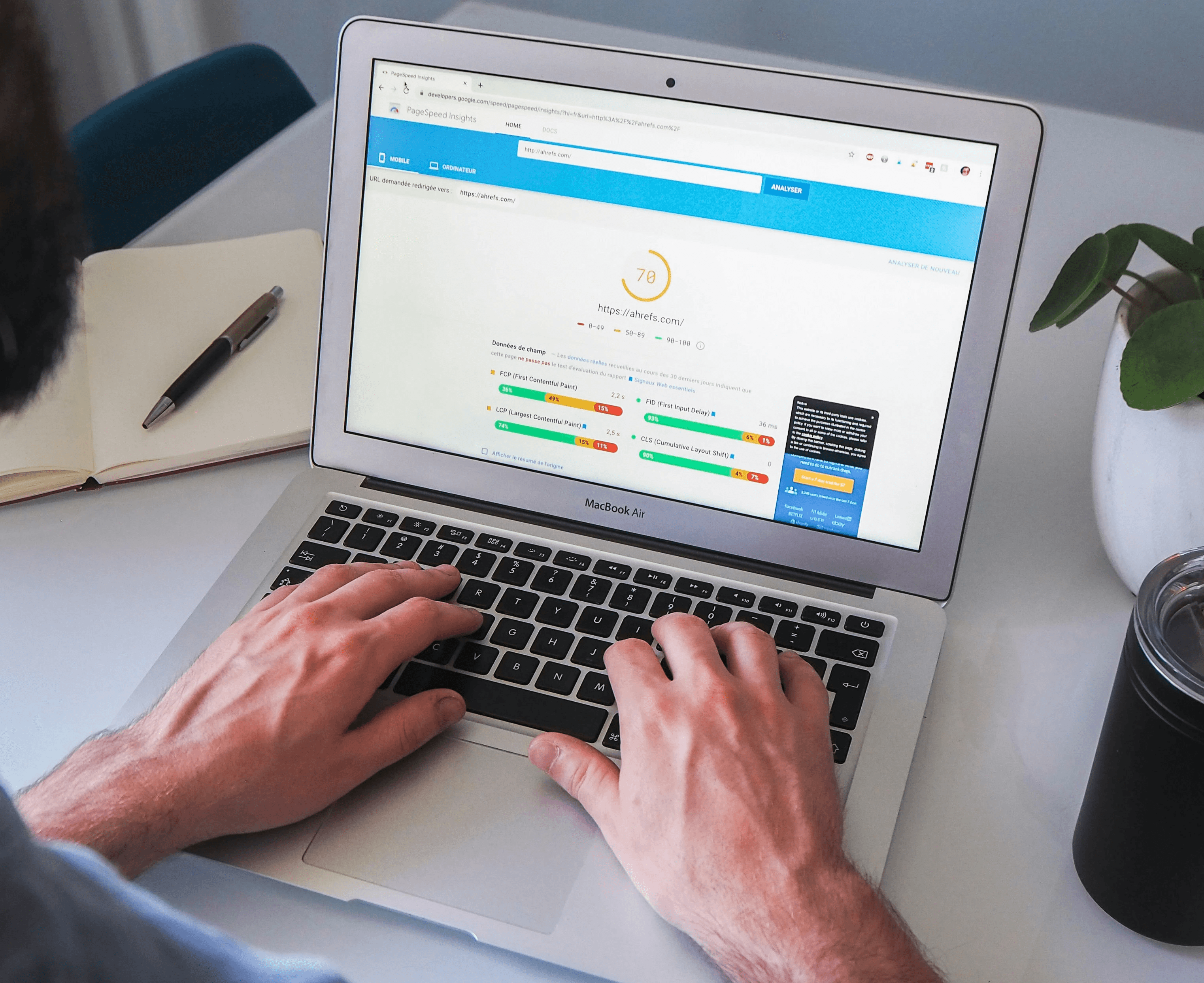
Every e-commerce CMO knows the statistic: a one-second delay in page load time can reduce conversions by 7%. Yet most brands treat page speed as a developer checkbox rather than a conversion rate optimization strategy.
Working with high-growth DTC brands processing millions in monthly revenue, I've witnessed a consistent pattern: the brands that prioritize technical performance consistently outperform those that focus solely on psychological testing.
This isn't about appeasing Google's algorithm. This is about understanding that your Core Web Vitals are conversion rate metrics disguised as performance scores. When a landing page has a 3-second Largest Contentful Paint (LCP), you're losing 15-20% of your paid traffic before they ever engage with your offer.
This post breaks down the technical architecture that enables high-converting landing pages, why most agencies get it wrong, and how to build a speed-first CRO system that compounds every test you run.
The Hidden Cost of Technical Debt
Most e-commerce brands are running on Shopify themes built for flexibility, not performance. These themes load 2MB of JavaScript on every page load, include dozens of unused CSS files, and defer critical rendering resources that tank your LCP score.
The result is your $10k/month ad spend is driving traffic to pages that hemorrhage conversions before the fold even renders.
Here's the math: if you're spending $50,000/month on paid ads at a 2% conversion rate, and your page speed is costing you 1% in conversions (a conservative estimate for most brands), you're losing $25,000/month in potential revenue. That's $300,000 annually from technical debt alone.
At CARO, we don't accept this trade-off. Every landing page we build starts with a performance budget: sub-1-second LCP, minimal JavaScript, and aggressive resource prioritization. This isn't optional—it's the foundation.
The Core Web Vitals as Conversion Metrics
Google's Core Web Vitals (LCP, FID, CLS) are often dismissed as SEO metrics. They're actually measuring the three dimensions of user experience that directly impact conversion:
Largest Contentful Paint (LCP): How quickly does the main content render? If your hero section takes 3 seconds to appear, you're asking users to wait for permission to engage. Every 100ms of delay here costs you 1% in conversion rate.
First Input Delay (FID): How responsive is the page to user interaction? A 200ms delay between clicking "Add to Cart" and the page responding creates friction that kills urgency. High FID scores signal bloated JavaScript that's blocking the main thread.
Cumulative Layout Shift (CLS): How stable is the page during load? If your product image shifts 100px downward as the page renders, users will mis-click and abandon. CLS above 0.1 is a conversion killer.
The brands that treat these metrics as conversion levers—not SEO checkboxes—consistently outperform competitors by 20-30% in A/B tests. Not because their psychology is better, but because their technical foundation allows users to engage without friction.
The Technical Stack for Speed-First CRO
Building a high-performance landing page requires a deliberate technical architecture. Here's the system we use at CARO:
Critical CSS Inlining: Instead of loading a 500KB stylesheet, we inline only the CSS required for above-the-fold rendering. Everything else is deferred. This alone cuts LCP by 400-600ms on most pages.
Font Display Strategy: Web fonts are conversion killers if not handled correctly. We use font-display: swap for all custom fonts and preload only the font weights required for the hero section. This eliminates font-based layout shifts and reduces LCP by 200-300ms.
Image Optimization: Every image is served as WebP with fallbacks, lazy-loaded below the fold, and sized exactly to the container dimensions. We use srcset aggressively to ensure mobile users aren't downloading desktop-sized assets.
JavaScript Budgeting: We enforce a strict 50KB JavaScript budget for landing pages. Anything beyond that has to be justified with conversion data. Most landing pages don't need 2MB of React or Vue—they need fast, responsive HTML.
Server-Side Rendering for Dynamic Content: For pages with personalization or dynamic offers, we use server-side rendering to ensure content is available on first paint. No spinners, no skeleton screens—just instant content.
The Compounding Effect of Technical Excellence
Technical performance doesn't just improve conversion rates—it amplifies every test you run.
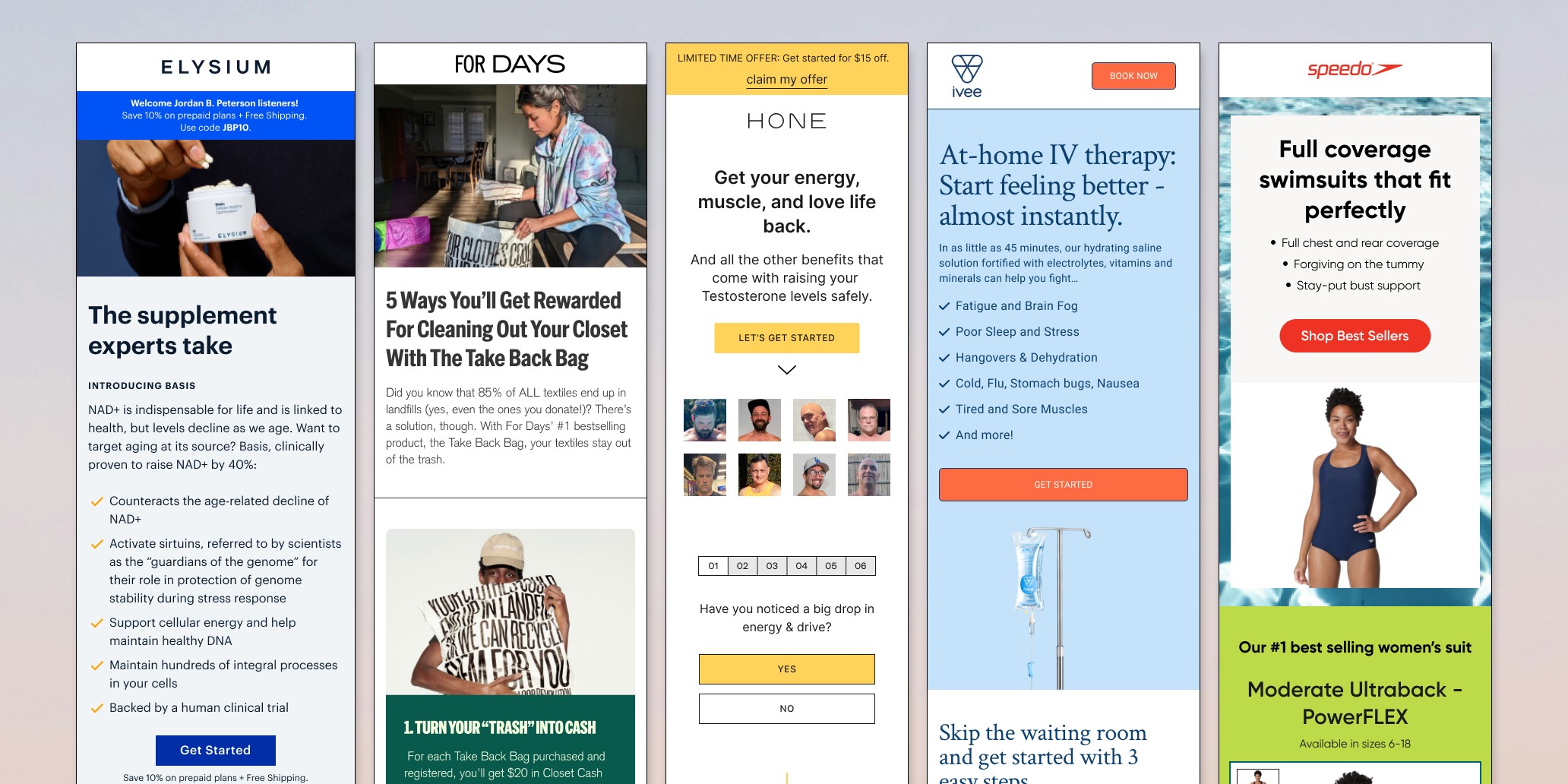
Working with a men's health and wellness brand launching a new product line, we didn't just focus on the offer structure or the copy. We built the landing page to load in under 1 second with a perfect Lighthouse score. The result was a 49% increase in CVR and a 20% reduction in CPA.
The real insight came later: every subsequent test we ran on that page performed better than tests on slower pages. The technical foundation created a higher baseline, which meant every optimization compounded.
A landing page for a high-performance athletic brand saw a 50% CVR increase in its first test—starting with a 0.8-second LCP. An apparel brand's listicle-style product page drove a 50% CVR lift and became the template for their entire site redesign, built with aggressive image optimization and zero render-blocking resources.
Speed isn't a feature. It's the foundation that makes every other optimization possible. This is why CARO templates are engineered for speed from day one—before we even think about running tests.
The System vs. The Test
Most agencies sell you on the promise of A/B testing. They'll test your hero copy, your CTA button color, your product images. They'll generate reports showing 5% lifts here, 3% improvements there.
What they won't tell you is that all of those tests are built on a foundation of technical debt that's costing you 15-30% in baseline conversion rate.
At CARO, we flip the model. We start with the technical foundation—the performance architecture that ensures your page can actually convert at its maximum potential. Then we layer in systematic testing on top of that solid base.
The difference is measurable. A page built on a 0.8-second LCP will outperform a page with a 3-second LCP by 20-30% before you run a single test. Your first "test" is actually fixing the technical foundation. Everything else is optimization on top of optimization.
Why Most Agencies Get This Wrong
The reason most CRO agencies ignore technical performance is simple: it requires actual engineering expertise. It's easier to sell design changes and copy tests than it is to rebuild a site's technical architecture for speed.
Agencies hire marketers and designers. They don't hire engineers who understand Critical Rendering Path, resource prioritization, and browser performance APIs. So they optimize what they know—psychology and design—and ignore what they don't—the technical stack.
The result is clients paying $10k-25k/month for marginal improvements on fundamentally broken pages. A 5% lift on a 1.5% conversion rate is still worse than a 0% lift on a 3% conversion rate that came from fixing page speed.
CARO exists because we saw this gap. We're engineers first, marketers second. We build the technical foundation that makes every marketing decision more effective.
Conclusion
The future of CRO isn't about running more tests—it's about engineering systems that make every test more effective. Page speed is the most overlooked lever in conversion optimization because it requires technical expertise that most agencies lack.
The brands that prioritize technical performance don't just see marginal improvements—they see step-function changes in conversion rates and ROAS. A 1-second LCP isn't a nice-to-have; it's a competitive advantage.
The question isn't whether you should optimize for speed. The question is: how much revenue are you leaving on the table by not prioritizing it?
At CARO, we engineer the foundation first. Then we optimize everything else on top of it. That's the system.
This level of deep-dive system building is the future of CRO. If you're ready to stop guessing and start scaling, book a discovery call here and we will walk through it together.